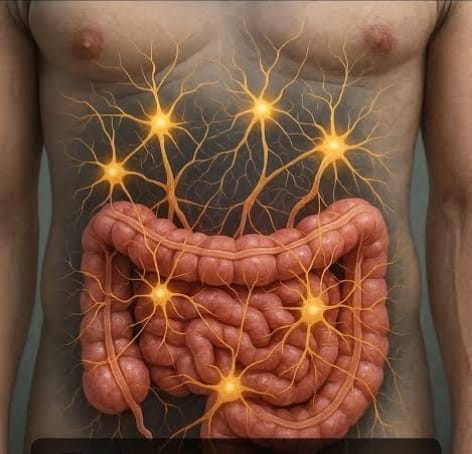
Recent scientific insights are drawing attention to the human gut’s remarkable internal control system, known as the Enteric Nervous System (ENS)—often described as the body’s “second brain.” Researchers explain that this complex network contains an estimated 100 to 500 million neurons, comparable to the number found in the spinal cord, and is distributed throughout the digestive tract from the esophagus to the rectum.
The ENS plays a crucial role in regulating digestion, intestinal movement, and the release of digestive enzymes, allowing the gastrointestinal system to function with a high degree of independence. Experts note that the gut can carry out many of these processes without direct instructions from the brain, demonstrating an advanced level of internal coordination.
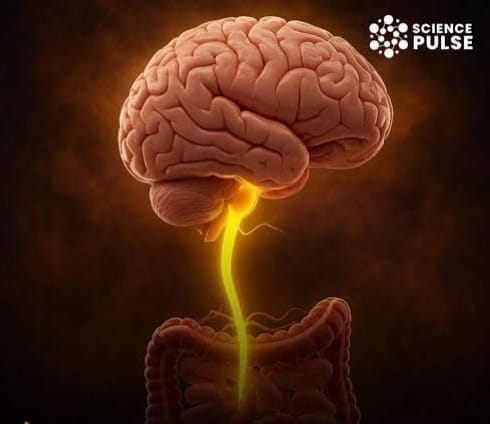
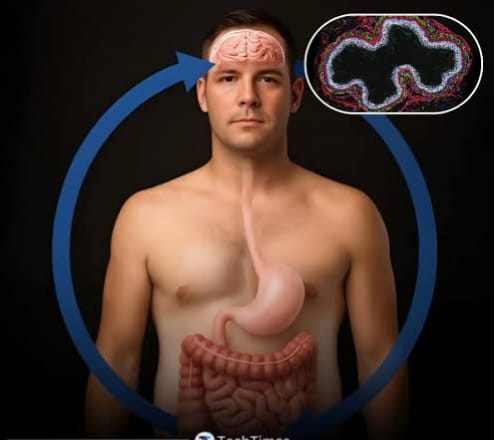
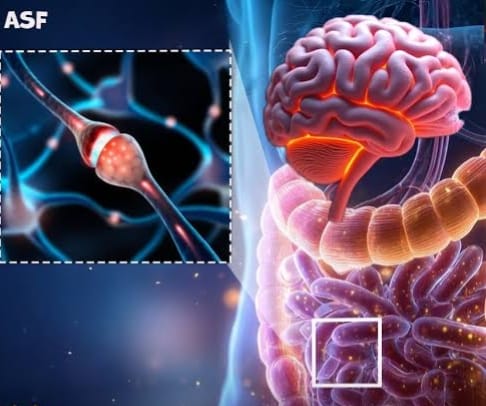
Despite this independence, the gut remains closely linked to the central nervous system. Communication between the two occurs primarily through the vagus nerve, enabling continuous exchange of signals that influence digestion, mood, and overall health.
Medical professionals say growing understanding of the ENS is reshaping perspectives on digestive health and its broader connection to mental and physical well-being.