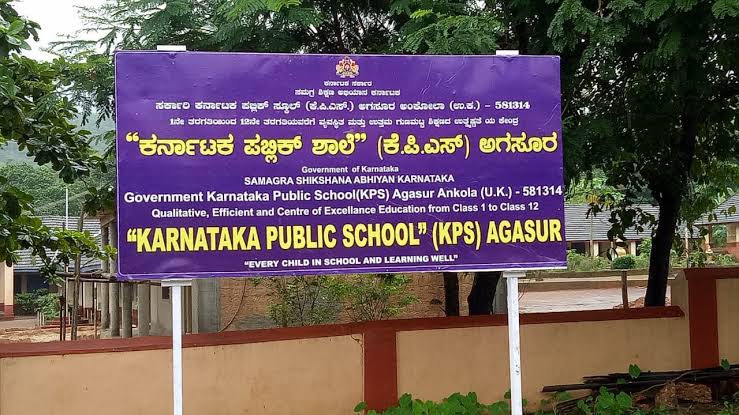

The Karnataka government school merger proposal linking government schools with Karnataka Public Schools (KPS) has sparked sharp criticism from pro-Kannada groups, teachers and parents across the state.
Karnataka government school merger proposal sparks statewide criticism
The Karnataka government school merger plan has triggered widespread opposition after reports suggested that government schools may soon be merged with institutions under the Karnataka Public Schools (KPS) model. The proposal, which has not yet been released as an official order, has already generated strong reactions from pro-Kannada groups, teachers’ associations and parent organizations who argue that the policy could weaken Kannada-medium education.
Officials involved in the proposal say the merger aims to streamline government resources, improve infrastructure, and address declining enrolment in standalone government schools. However, critics warn that the move may have unintended consequences on accessibility, language rights and the stability of rural education.
Activists fear dilution of Kannada-medium schooling
One of the strongest objections to the Karnataka government school merger has come from pro-Kannada organizations. They argue that merging schools into the centralized KPS system could gradually erode the presence of Kannada as the primary medium of instruction in rural regions.
Activists say that the proposal is being framed as an administrative reform but may instead lead to cultural and linguistic setbacks.
Leaders of several Kannada groups stated that the shift “is not a reform it is a quiet attempt to weaken Kannada-medium schools. Language rights are being compromised in the name of administrative efficiency.” Their concern is that rural communities, which rely heavily on Kannada-medium government schools, may face long-term disadvantages.
Teachers’ unions raise concerns about staff and student disruption
Teachers’ associations have also expressed disapproval of the Karnataka government school merger. According to them, merging multiple schools under the KPS structure could disrupt existing staff allocations and overload certain campuses. They argue that redeploying teachers or relocating students could break continuity in learning.
Another concern raised by teachers is the additional travel distance many students may face. For children in rural areas especially those from economically weaker families neighbourhood government schools remain essential for accessibility, affordability and consistency.
Teachers also fear that such shifts may create new logistical challenges for families already dependent on local schooling systems.
Parents warn against shifting children to distant institutions
Parents’ associations have echoed similar concerns, stating that the Karnataka government school merger could create significant practical difficulties. For many families, especially in rural and semi-urban regions, the nearest government school is a crucial part of daily life.
Parents say that moving children to distant KPS institutions is “unnecessary and impractical.” They argue that local schools ensure safety, familiarity and ease of access factors that play an important role in regular attendance and stable learning.
Some parents also fear that merging schools may lead to overcrowding in KPS institutions, affecting the quality of education.
Government yet to release an official roadmap
Even though the Karnataka government school merger has not been finalized, the discussions have already gained momentum statewide. The absence of a detailed government order has contributed to growing speculation and anxiety among stakeholders.
Education observers say the proposal has opened a broader debate on the future structure of Karnataka’s schooling system, especially concerning rural education reforms and the preservation of Kannada-medium institutions.
Debate expected to intensify in the coming weeks
As discussions continue, the Karnataka government school merger is likely to remain a major topic within education circles. Pro-Kannada groups, teachers and parents are urging the government to reconsider the proposal, stressing the importance of linguistic identity, local accessibility and the continuity of existing schools.
With concerns rising across multiple sectors, Karnataka is poised for more intense debates on how the education system should evolve and how government-run schools should be strengthened rather than consolidated.